Logistics technology for small business Utah drives cost savings by leveraging AI for precise demand forecasting and route optimization to minimize fuel, labor, and storage expenses. Local firms utilize automated inventory management and Utah's expanding tech talent pool to streamline fulfillment workflows; this reduction in manual oversight directly lowers overhead while increasing operational efficiency.
As a Utah business owner, you likely feel the squeeze of rising transportation costs and the unpredictable nature of the I-15 corridor. Managing thin margins becomes increasingly difficult when your supply chain relies on manual processes or outdated spreadsheets. Logistics technology for small business Utah is no longer a luxury; it is the fundamental requirement for staying competitive in 2026. This year, the focus shifts from simply moving goods to optimizing every mile through data driven intelligence. In this guide, we will explore how AI driven route optimization reduces fuel consumption and how predictive analytics stabilizes your seasonal inventory swings. We will also discuss the critical role of regional partners who blend these cloud based tools with local expertise. By the end, you will understand how to leverage modern software to protect your bottom line while scaling your operations effectively.
Smarter Shipping: The Rise of Logistics Technology for Small Business Utah
The rapid expansion of the Utah tech corridor, commonly known as Silicon Slopes, has created a ripple effect that extends far beyond the software hubs of Lehi and Provo. This innovation is fundamentally reshaping how goods move through the Wasatch Front and into Juab County. For local manufacturers and e-commerce startups, logistics technology for small business Utah has transitioned from a high priced luxury to a baseline requirement for survival. National retailers have set a standard for speed and transparency that local customers now expect, regardless of a vendor's size.
Fortunately, the barrier to entry has dropped significantly. Advanced systems for freight coordination and inventory tracking are no longer exclusive to companies with massive R&D budgets. Even businesses with monthly revenues between $1,001 and $5,000 can now leverage modern logistics solutions to streamline their operations. By utilizing flexible logistics support, smaller operations in Nephi or Santaquin can achieve the same level of precision as their larger competitors. This shift allows local retailers and construction firms to compete on a level playing field, ensuring that local operations remain agile. Leveraging Juab Logistics expertise helps bridge the gap between sophisticated software and the practical, daily needs of the Utah business community.
How AI Driven Route Optimization Cuts Fuel Costs on the I-15 Corridor
The leap from tech theory to road reality occurs when AI-driven route optimization meets the I-15 corridor. For small businesses, the stretch of highway between the Wasatch Front and Juab County is a gauntlet of variable factors including heavy commuter traffic, steep grades, and unpredictable weather. Implementing logistics technology for small business Utah allows smaller operations to navigate these variables with the same precision as a multi-national carrier.
AI algorithms do more than plot a line from point A to point B. They analyze real-time variables such as lane closures at the Point of the Mountain, wind speeds through the Juab Valley, and snow accumulation in the mountain passes. By calculating the most fuel-efficient speeds and paths, these systems prevent the waste of idling in construction zones or backtracking through rural routes. For a business shipping from Nephi to Provo, a diversion caused by an accident in Spanish Fork Canyon can be managed proactively rather than reactively, saving hours of driver time and gallons of diesel.
Applying Juab Logistics expertise to these modern logistics solutions means that route planning is tailored to the specific quirks of Utah’s terrain. The software optimizes delivery windows, ensuring that rural drop-offs are clustered to eliminate "deadhead" miles. For companies operating with modest monthly revenues, these efficiencies are not just about convenience; they are about protecting the bottom line by turning what used to be a variable, high-cost expense into a controlled, predictable line item.
Predictive Analytics: Managing Utah's Seasonal Supply Chain Swings
Efficiency on the road is only half the battle; knowing when those goods need to move is what separates a reactive business from a proactive one. In Utah, where the transition between seasons is sharp, predictive analytics provides a critical buffer. Logistics technology for small business Utah now utilizes machine learning to analyze historical data, allowing local operations to anticipate demand spikes before they stress the supply chain.
Agricultural operations in Juab County, for example, face high stakes during the harvest season. A grower in Nephi can use data to forecast yield timing for alfalfa or small grains based on historical weather patterns and moisture levels. Instead of scrambling for transport at the last minute, these producers can secure flexible logistics support weeks in advance. This foresight ensures that crops do not sit in the field losing value while waiting for a truck, a common pitfall that erodes profit margins for smaller operations.
Similarly, outdoor recreation retailers along the Wasatch Front deal with a rapid shift from summer hiking and biking gear to winter sports equipment. Predictive tools allow these businesses to identify the exact window when demand for winter inventory will surge. By analyzing past sales cycles and regional weather trends, a shop can time their warehouse arrivals to avoid the twin dangers of stockouts or overstocking. Overstocking is particularly damaging for businesses with monthly revenues between $1,001 and $5,000, as it ties up precious capital in "dead" inventory that occupies expensive floor space.
By leveraging Juab Logistics expertise, small businesses can implement modern logistics solutions that turn seasonal volatility into a manageable variable. These tools empower owners to maintain lean inventory levels while remaining responsive to the local market, ensuring that every shipment is timed for maximum revenue and minimal waste.
Reducing Labor Costs with Cloud Based Inventory Management
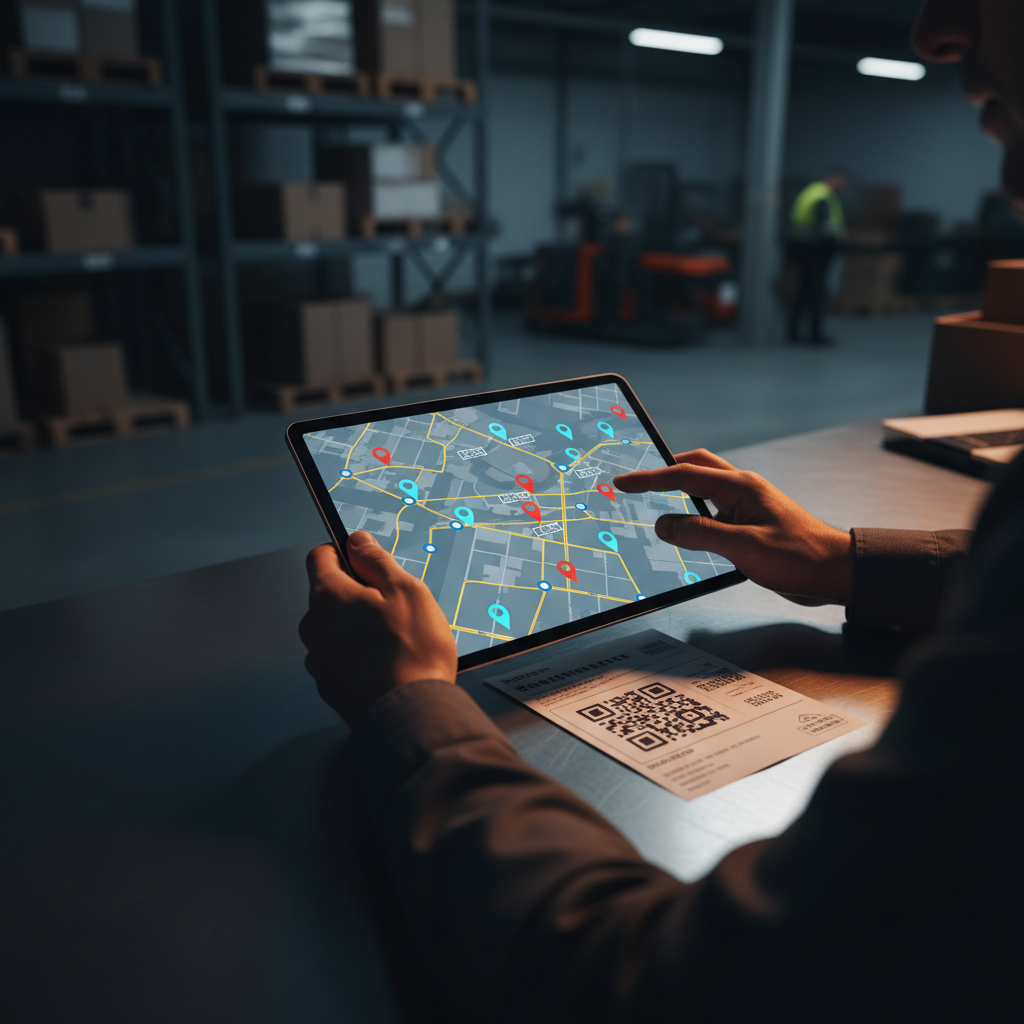
Effective logistics technology for small business Utah addresses the labor drain caused by manual inventory oversight. Traditional paper manifests and spreadsheet tracking are prone to human error, which creates hidden costs like mis-ships, lost stock, and redundant labor hours. Implementing a cloud based Warehouse Management System (WMS) replaces these fragile processes with digital manifests and barcode scanning, ensuring that what leaves the warehouse matches the customer order exactly.
For an operation earning between $1,001 and $5,000 monthly, the cost of a single lost pallet or a returned shipment due to a picking error can erase a week’s worth of profit. Real time tracking provides a necessary safeguard against these losses. These modern logistics solutions extend beyond the warehouse walls by offering mobile visibility. A business owner can verify stock levels from a smartphone while meeting a vendor in Nephi, checking a job site in Provo, or navigating traffic in Salt Lake City. This transparency eliminates the need for manual shelf checks and allows employees to focus on high value tasks rather than hunting for misplaced items. By utilizing flexible logistics support and digital tools, small businesses maintain the lean, organized footprint necessary to scale without ballooning their payroll.
The Human Element: Why AI Enhances Local Logistics Experts Rather Than Replacing Them

The question of whether AI will replace logistics jobs is a common concern as logistics technology for small business Utah becomes more sophisticated. In the tight-knit business landscape of the Wasatch Front and Juab County, the reality is that technology serves as a powerful assistant rather than a substitute for human judgment. For small businesses, the value of a delivery often lies in the reliability of the person behind the wheel and the responsiveness of the dispatcher on the phone.
Juab Logistics expertise focuses on using these digital tools to empower personnel. Instead of replacing roles, AI provides dispatchers with real time data to solve complex problems, such as rerouting a shipment around a sudden closure on the I-15 or adjusting for a manufacturer's unexpected production delay. This ensures that flexible logistics support remains truly flexible, allowing humans to make informed decisions that a rigid algorithm might miss.
By integrating modern logistics solutions, drivers are relieved of the administrative burden of manual logging and navigation guesswork. This allows them to focus on providing professional, high-touch service at every drop-off point, from Nephi to Salt Lake City. In this environment, technology does not remove the human element; it removes the friction that prevents humans from doing their best work for their clients.
Lowering Barriers: Why a Regional Logistics Partner is Your Best Tech Investment

Investing in logistics technology for small business Utah does not require a massive capital outlay if handled strategically. For a company in Nephi or Payson generating between $1,001 and $5,000 in monthly revenue, the cost of licensing a proprietary AI routing platform or a full scale warehouse management system can easily exceed several months of total gross income. Beyond the initial software fees, the technical debt of implementation, staff training, and ongoing system updates often creates a financial barrier that prevents smaller firms from ever modernizing their supply chain.
Partnering with a regional provider offers a practical pathway to bypass these upfront expenses. By utilizing Juab Logistics expertise, small businesses gain immediate access to an established digital infrastructure. This model shifts the financial burden from a high risk capital expenditure to a manageable, scalable operating expense. Instead of paying for a software suite that might remain underutilized, a business pays only for the flexible logistics support they actually use.
Investment Factor | In-House Tech Implementation | Regional Partner Outsourcing |
|---|---|---|
Upfront Capital | High (Licenses & Integration) | Zero to Minimal |
Technical Expertise | Requires Internal IT/Training | Handled by Partner |
Scalability | Fixed Software Capacity | Grows with Order Volume |
Maintenance | Ongoing Internal Costs | Included in Service |
Accessing modern logistics solutions through a regional partner allows Utah manufacturers and retailers to leverage high level data analytics and route optimization without hiring a data scientist. This collaborative approach ensures that even a small operation in Juab County can utilize the same competitive tools as national distributors; it keeps overhead low while maximizing delivery precision and protecting the bottom line.
What is the Best Logistics Software for Small Businesses in 2026?
Standardizing operations in 2026 requires a three-pronged software approach. A Transportation Management System (TMS) handles freight coordination, while a Warehouse Management System (WMS) prevents inventory leakage. Last-mile tracking bridges the communication gap with the end customer, providing the transparency that Utah consumers now expect.
When evaluating logistics technology for small business Utah, prioritize these key features:
Feature | Importance for Small Business |
|---|---|
API Integration | Syncs inventory with Shopify, QuickBooks, or ERPs. |
Mobile Friendliness | Allows drivers and owners to manage loads via smartphone. |
Local Support | Ensures the system accounts for regional terrain and weather. |
Selecting software with strong local support is critical; a generic platform cannot navigate a closed mountain pass or a specific Utah delivery requirement. Accessing these tools through Juab Logistics expertise ensures the technology is configured for the regional landscape, allowing firms to utilize modern logistics solutions without managing the complex backend themselves.
Staying competitive in 2026 requires Utah small businesses to embrace logistics technology that drives efficiency and reduces overhead. These innovations offer a clear path toward sustainable cost savings and improved customer satisfaction. However, implementing new systems can be complex for a growing team. If you want expert help streamlining your supply chain, feel free to read more about our mission and experience. We focus on providing the guidance needed to help local businesses navigate these advancements with confidence and ease.