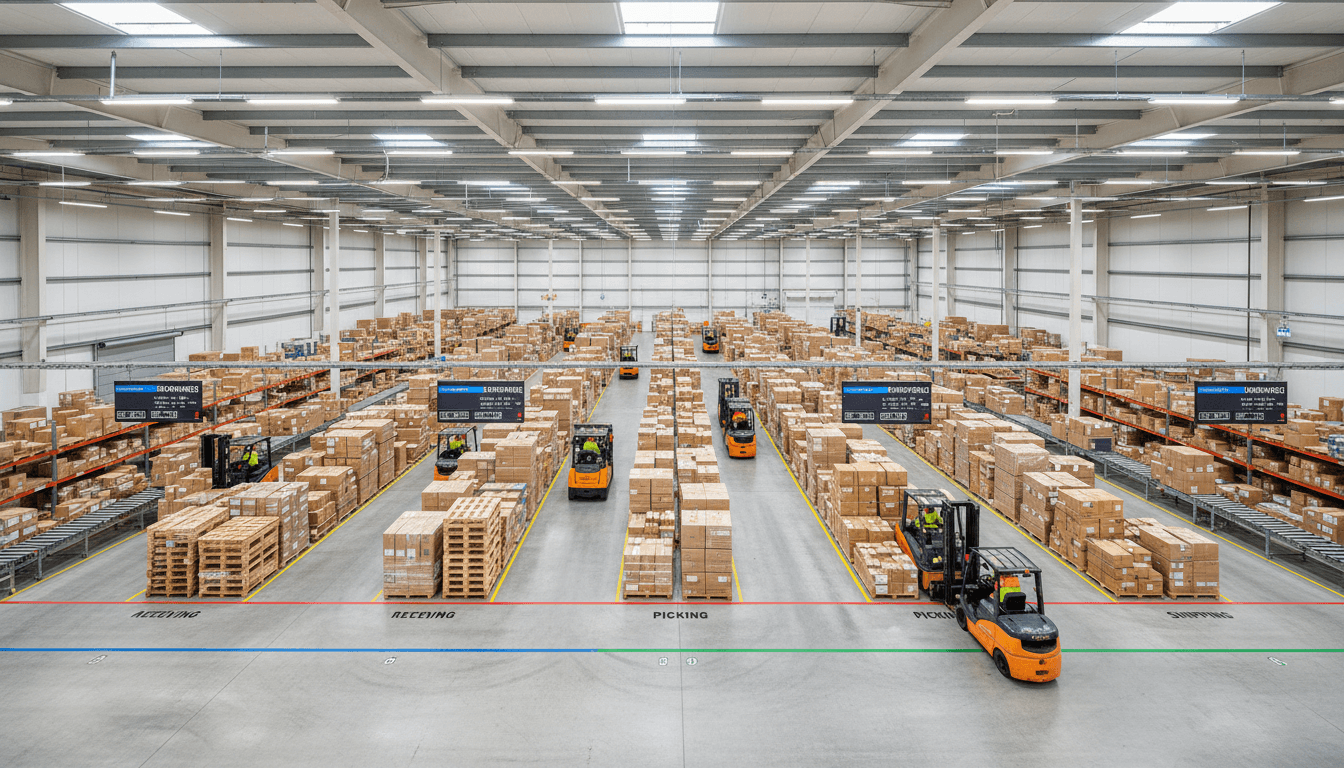
Effective ecommerce fulfillment for small business Utah requires optimizing a five step cycle that includes inventory receiving, storage, picking, packing, and shipping. Scaling these operations successfully often requires local businesses to transition from manual in-house tasks to a professional logistics partner; this shift ensures faster delivery times and improved accuracy for growing customer bases.
Running a small business in Utah often begins with a garage full of inventory, but manual picking and packing quickly becomes a bottleneck that stifles long term growth. As order volumes rise, the logistical complexity of navigating the Wasatch Front or reaching rural communities can drain your resources and distract you from core product development. Efficient fulfillment is not just about shipping boxes; it is the strategic backbone that allows local startups to compete on a national scale while maintaining regional agility. In this guide, we explore the essential steps to mastering your supply chain, from calculating the true costs of in-house operations to identifying the exact moment you have outgrown your current space. You will gain a clear roadmap for scaling your logistics, overcoming unique rural delivery challenges, and selecting a partner that understands the specific infrastructure of the Beehive State.
What is Ecommerce Fulfillment and Why It Matters for Utah Startups
Ecommerce fulfillment for small business Utah owners encompasses the entire lifecycle of a product after it leaves the manufacturer. It begins with receiving raw goods or finished inventory and continues through storage, order processing, and the final moment a customer in Nephi or Salt Lake City unboxes their order. For a growing startup, this process is the backbone of brand reputation. While national third party logistics (3PL) providers offer scale, they often lack the localized agility required to navigate Utah’s specific geography.
A regional partner like Juab Logistics provides modern logistics solutions tailored to the Intermountain West. Our central location in Juab County serves as a strategic hub, bridging the gap between the densely populated Wasatch Front and the expansive rural southern counties. This geographic advantage allows for shorter transit times and lower shipping costs compared to shipping from out of state hubs. By utilizing flexible warehousing support, startups can avoid the overhead of long term leases while maintaining the ability to reach customers across the state quickly. Unlike generic 3PLs that may struggle with the nuances of rural Utah addressing or mountain pass logistics, a local expert ensures that the final mile is just as professional as the first.
The 5 Step Order Fulfillment Process for Growing Utah Businesses

For an ecommerce fulfillment for small business Utah operation to scale, the workflow must move from manual tracking to a standardized, repeatable system. This transition happens through five distinct stages that turn raw inventory into satisfied customers.
Receiving Inventory: The process begins the moment a shipment arrives at the warehouse. Rather than simply stacking boxes, a professional logistics partner inspects every unit for damage and verifies the count against packing slips. Each item is then logged into a digital inventory management system, ensuring the stock levels on your website match what is physically on the shelf. Prompt logging prevents the "ghost inventory" issues that lead to overselling and frustrated customers.
Inventory Storage: Effective storage is about maximizing speed rather than just space. Using flexible warehousing support, items are organized based on sales velocity. Products that move quickly are placed in easily accessible pick zones, while seasonal or bulk items are stored in high-density areas. This systematic organization reduces the time spent searching for items during high-volume periods, such as the Utah harvest or holiday rushes.
Order Processing: Modern systems integrate directly with storefronts like Shopify or WooCommerce. When a customer completes a purchase, the order data transmits instantly to the warehouse team. This automation eliminates manual entry errors and ensures that orders are queued for fulfillment within minutes of the sale, providing the rapid response times that modern shoppers expect.
Picking and Packing: Accuracy is paramount during this stage. Using digital pick lists, workers gather the correct SKUs and prepare them for transit. Juab Logistics leverages local packaging supplies from sources in Salt Lake City or Provo to maintain high presentation standards while keeping shipping costs low. Custom inserts or specific branding requirements are applied here to maintain the personal touch of a small business.
Shipping and Tracking: The final stage involves selecting the most efficient carrier and generating tracking numbers. Because Juab County is located away from the severe congestion of massive national hubs, regional shipments often bypass the typical transit delays seen in overcrowded urban centers. This localized expertise ensures that a package destined for Millard County or Salt Lake City enters the carrier network through the most direct route possible. If you are ready to streamline these operations, contact Juab Logistics to discuss integrating modern logistics solutions into your workflow.
Measuring the True Cost: In-House vs Outsourced Fulfillment in Utah

Determining the exact point to transition from DIY shipping to a professional partner requires an honest look at your fulfillment cost per order. While it is tempting to view in-house labor as free, the financial reality changes as volume increases. For a small business shipping 100 orders a month, the overhead is often absorbed by the owner's personal time and existing home space. Once that volume hits 500 orders, the efficiency of modern logistics solutions becomes a financial necessity.
In Utah's current commercial real estate climate, warehouse rent is rising rapidly along the Wasatch Front. A small dedicated space in Provo or Salt Lake City can easily cost $1,000 per month; this adds $2.00 to every package before a single item is even picked. When you factor in shipping supplies, labor, and the retail price of postage, in-house costs often exceed the $8 to $15 per order benchmark typical of outsourced services.
Expense Comparison | In-House (500 orders) | Outsourced (500 orders) |
|---|---|---|
Facility Rent (Utah) | $1,000+ | $50 – $200 (Storage only) |
Packing Materials | $1.50/order | $0.50 – $1.00/order |
Shipping Software | $50 – $100 | Included |
Owner's Labor | ~50 hours | 0 hours |
The most significant expense is the opportunity cost. Every hour spent taping boxes is an hour not spent on marketing or product development. By utilizing flexible warehousing support, owners can convert these fixed overhead costs into variable costs that scale precisely with sales volume. This transition is essential for ecommerce fulfillment for small business Utah operations that want to remain competitive against larger retailers. If your internal costs are creeping toward the $20 mark, it is time to contact Juab Logistics for a localized audit of your supply chain expenses.
When Should You Hand Off Your Logistics? 5 Signs You Have Outgrown Your Garage

Transitioning from a home-based operation to a professional partner is a pivotal moment for a founder. When the math on cost per order starts to favor outsourcing, physical signs in your daily operations usually follow. Identifying these tipping points early prevents a service breakdown that could damage your brand reputation.
Seasonal Spikes: High-volume periods, such as the Utah harvest season or the November holiday rush, often overwhelm a small team. If you cannot scale your labor or space for a sudden 300 percent increase in orders, your delivery times will inevitably lag.
Frequent Shipping Errors and Stockouts: As order volume climbs, manual picking methods lead to mistakes. If you are regularly shipping the wrong SKU or suffering from stockouts because your inventory count is inaccurate, it is time for modern logistics solutions that utilize real-time tracking.
The Marketing Bottleneck: Growth stalls when a business owner spends four hours a day taping boxes. If logistics prevents you from focusing on product development or customer acquisition, the business is effectively capped by your physical output.
Missed Carrier SLAs: National carriers require strict adherence to pickup schedules. If your packages are not staged and ready when the truck arrives, you miss your Service Level Agreements, leading to delayed arrivals in distant counties.
Physical Space Constraints: When your living room in Juab County is overflowing with boxes and packing peanuts, you have outgrown the residential model. Moving to a dedicated facility is not just about space; it is about professionalizing your inventory management.
By utilizing flexible warehousing support, you move from a reactive shipping model to a proactive supply chain. If these signs sound familiar, it is time to contact Juab Logistics to discuss how to streamline your ecommerce fulfillment for small business Utah operations.
Navigating the Last Mile: Unique Challenges for Rural Utah Delivery

The final leg of a package's journey, known as the last mile, is often the most expensive and complex part of the supply chain. For ecommerce fulfillment for small business Utah, this complexity is magnified by the state’s diverse geography. While delivering to an office in Salt Lake City is straightforward, shipping to a ranch in Millard County or a startup in Sanpete County requires a different level of logistical precision. National carriers often rely on automated routing that fails to account for the nuances of rural addresses or seasonal road closures in the canyon passes.
Juab Logistics leverages local knowledge to overcome these barriers. A regional partner understands that a "street" in rural Juab County might be a private road or an unpaved lane that requires specific vehicle types. Large national providers often consolidate rural shipments, causing multi day delays as they wait for a full load to justify the trip. By utilizing modern logistics solutions, we maintain consistent delivery schedules regardless of the destination's population density. This regional focus helps eliminate the common "rural surcharges" that drain profit margins for small retailers. To ensure your products reach every corner of the state reliably, you can contact Juab Logistics to integrate local expertise into your delivery strategy.
Finding the Right Fulfillment Partner for Your Small Business
Selecting a partner is more than finding a warehouse; it is about choosing a scalable extension of your operational team. For companies generating between $1,000 and $5,000 in monthly revenue, the primary challenge is often finding a provider that offers modern logistics solutions without demanding high minimum order volumes. The ideal partner should balance advanced technology with enough contract flexibility to accommodate your growth trajectory.
Software integration is a non-negotiable requirement. Your fulfillment provider's system must sync seamlessly with platforms like Shopify, Amazon, or WooCommerce to prevent the inventory discrepancies that lead to backorders. Furthermore, physical location remains a competitive advantage. Proximity to the I-15 corridor is vital for maintaining fast transit times to both the Wasatch Front and southern Utah. A centrally located facility in Juab County allows your ecommerce fulfillment for small business Utah operation to reach major population centers while bypassing the gridlock of larger metropolitan hubs.
Evaluation Factor | Why It Matters for Utah Startups |
|---|---|
Software Integration | Auto-syncs Shopify/Amazon orders to reduce manual entry errors. |
Contract Flexibility | Avoids long-term lock-ins for businesses in the $1k-$5k revenue range. |
I-15 Proximity | Ensures rapid transit to both Salt Lake City and rural southern counties. |
Personalized Support | Provides direct access to local experts rather than a generic call center. |
Juab Logistics bridges the gap between massive, impersonal conglomerates and small-scale local operations. We offer a professional tech stack alongside the personal service of a family-owned business, providing flexible warehousing support tailored to growing brands. If you need a partner that understands the specific demands of the Utah landscape, contact Juab Logistics to discuss a customized plan for your business.
Frequently Asked Questions About Utah Ecommerce Logistics
Understanding the mechanics of third party logistics helps clarify how to scale your operations. These common questions address the specific concerns of retailers managing ecommerce fulfillment for small business Utah growth.
Is a fulfillment center a 3PL? Yes. A fulfillment center is the physical facility where a third party logistics (3PL) provider manages your inventory. While the terms are used interchangeably, a 3PL provides the comprehensive service, including the technology and labor, while the fulfillment center is the hub where those modern logistics solutions occur.
How much does Shopify fulfillment cost? Costs are generally broken down into storage and activity fees. Monthly storage for small businesses typically ranges from $20 to $50. Picking and packing fees usually cost between $2 and $5 per order. When including the final shipping rate, most businesses should benchmark their total fulfillment cost between $8 and $15 per order.
What are the best order fulfillment services for small businesses? Regional specialists are often the best choice over national conglomerates. Local providers offer flexible warehousing support and personalized customer service that giant corporations cannot match for smaller accounts. Choosing a partner with local expertise ensures your shipping strategy is optimized for Utah's unique terrain. Contact Juab Logistics to see how a regional approach can improve your delivery speed and accuracy.
Mastering these five steps will set your small business on a clear path toward sustainable growth within the Utah market. While building an efficient fulfillment system is rewarding, the logistical demands of a scaling company can quickly become complex for a small team. If you want expert help navigating these challenges, we are ready to assist. You can learn more about us to see how we help local entrepreneurs reclaim their time and focus on expanding their brands.