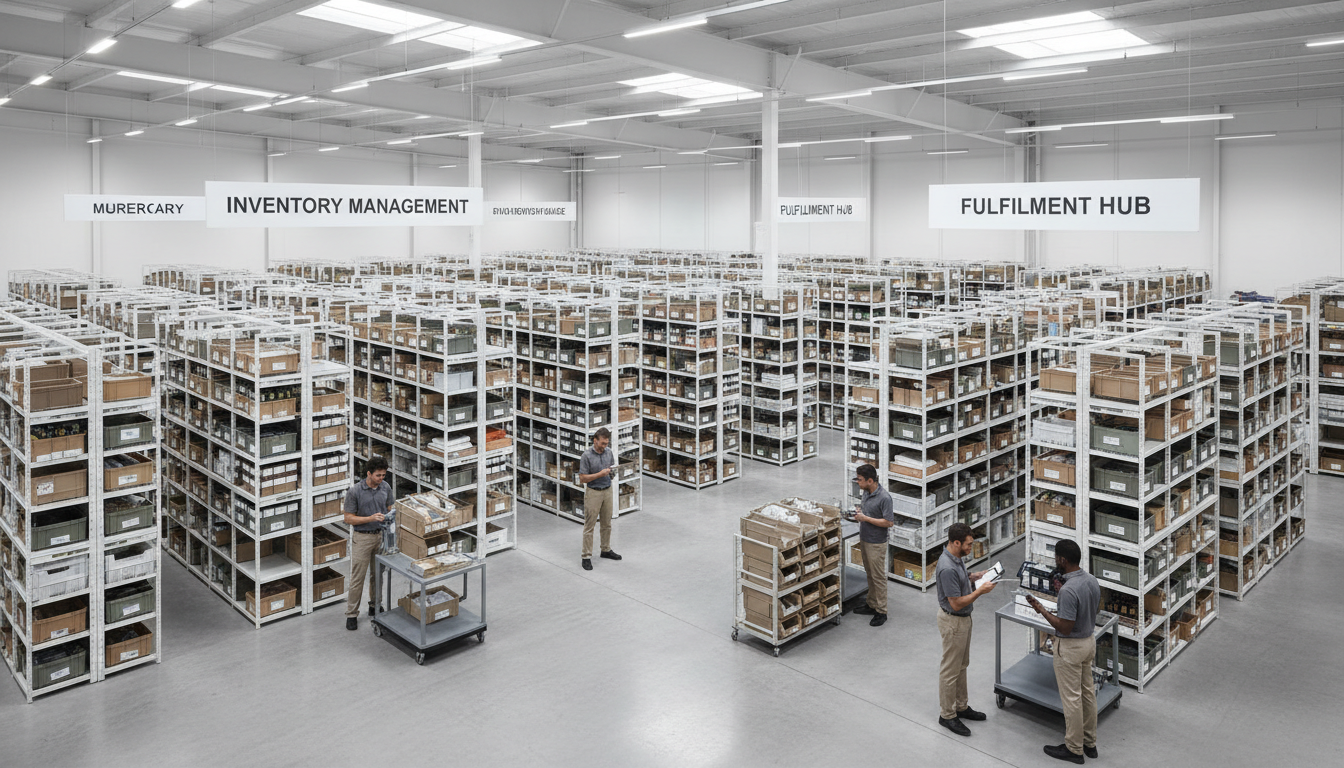
Small businesses in Utah should select storage solutions based on their order volume and budget, ranging from affordable self-storage to comprehensive 3PL fulfillment centers. Finding the right warehousing for small business Utah involves comparing flexible shared spaces with traditional leases, which often start around $1,000 per month in the Salt Lake City area. This strategic choice allows owners to scale their physical footprint while maintaining access to essential logistics services.
As a growing Utah entrepreneur, you likely reached a point where your garage or basement no longer functions as a viable distribution hub. Tripping over boxes and managing disorganized inventory creates bottlenecks that stifle your ability to fulfill orders quickly. Scaling your operations requires a shift from survival mode to strategic infrastructure management. In this guide, we examine the indicators that signal it is time to transition. We explore the critical differences between self storage and professional warehousing, while highlighting the unique fiscal advantages offered by Utah, including Freeport exemptions. You will learn about the four primary warehousing models suited for small businesses and discover a roadmap for professionalizing your logistics without compromising your bottom line.
Recognizing the Growth Wall: When to Move Beyond the Garage

Every successful Utah startup reaches a point where the local post office knows the business owner by name and the living room carpet is no longer visible under stacks of cardboard. This growth wall is a physical and operational limit that signals the need to transition to professional warehousing for small business Utah operations. While a garage provides a low-cost starting point, it eventually becomes a bottleneck that prevents a company from reaching its next revenue tier.
Industry data indicates that hitting a threshold of 15 to 20 orders per day is the primary tipping point. At this volume, the manual labor of picking, packing, and sorting becomes a full-time job that detracts from high-level tasks like product development and marketing. What was once manageable organized chaos in a basement or spare room eventually evolves into shipping errors, inventory inaccuracies, and lost time. A professional setup replaces makeshift shelving with high-density racking and systematic tracking, enabling a level of precision that residential spaces simply cannot support.
Efficiency at scale also requires a sophisticated understanding of your inventory. Applying the 80/20 rule reveals that approximately 20 percent of your product line likely generates 80 percent of your total revenue. In a cramped home environment, these high-velocity items often become inaccessible, buried behind slow-moving stock or seasonal overages. Professional warehousing allows for strategic slotting, ensuring these critical, high-revenue products are staged for rapid fulfillment. Utilizing modern logistics solutions ensures that your most profitable inventory is always ready for immediate dispatch.
Transitioning away from a home-based setup is not just about gaining square footage; it is about reclaiming the time necessary to lead the business. Small business owners across Nephi and the surrounding areas often find that the move to a dedicated facility provides the Juab County logistics expertise required to transform a hobby-scale operation into a regional competitor.
Self Storage vs Professional Warehousing for Small Business
Transitioning from a residential space often leads Utah business owners to consider self-storage as a logical intermediate step. Self-storage is frequently the first choice for micro-businesses in high-density areas like Salt Lake City because it is inexpensive, requires minimal commitment, and offers a quick fix for space constraints. However, there is a fundamental functional gap between a storage unit and professional warehousing that can either facilitate or stifle your company’s ability to scale.
Feature | Self-Storage Units | Professional Warehousing |
|---|---|---|
Primary Purpose | Static holding of items | Active movement and fulfillment |
Equipment | None (standard roll-up doors) | Loading docks, forklifts, pallet jacks |
Technology | Manual tracking (lock and key) | Inventory management software (WMS) |
Environment | Variable (often lacks regulation) | Climate control for sensitive goods |
Logistics Support | DIY (owner must be present) | Managed receiving and shipping |
The core difference between storage and warehousing lies in the distinction between static placement and active movement. A storage unit is designed for items to sit undisturbed for long periods. It lacks the infrastructure for frequent inbound and outbound shipments. For example, most self-storage facilities cannot accommodate semi-trucks or provide the loading docks necessary for efficient freight handling. When a business relies on these units, the owner must personally meet every delivery driver and hand-unload shipments, a process that wastes hours of productive time.
Professional warehousing for small business Utah operations focuses on throughput. By leveraging Juab County logistics expertise, businesses gain access to a facility built for the constant flow of goods. This includes specialized equipment to handle palletized inventory and the personnel to sign for deliveries in the owner’s absence. Furthermore, Utah’s extreme temperature swings make climate control a necessity for many manufacturers and retailers. A standard metal storage unit offers little protection against the heat or cold, whereas a professional facility ensures inventory remains in peak condition.
Integrating modern logistics solutions also introduces high-level technology to the supply chain. Unlike the manual spreadsheets used in self-storage setups, professional warehousing utilizes digital tracking to provide real-time visibility into stock levels. For those ready to move beyond simple storage toward a dynamic distribution model, the next step is to contact Juab Logistics to evaluate how professional infrastructure can streamline daily operations.
The Utah Strategic Advantage: Freeport Exemptions and Central Logistics

Operating in Utah provides specific financial advantages that go beyond simple storage rates. One of the most significant benefits for growing companies is the Utah Freeport Warehouse Exemption. This state policy allows businesses to avoid personal property tax on inventory that is stored in Utah but destined for shipment out of state within a 12 month period. For an e-commerce brand or manufacturer, this exemption can represent a substantial reduction in annual overhead. By utilizing Juab County logistics expertise to manage inventory, companies can ensure their record keeping supports these exemptions, turning their warehouse into a tax sheltered environment for products in transit.
Location plays an equally critical role in reducing the cost of warehousing for small business Utah operations. Juab County sits as a central hub for the Western United States. Positioned strategically along the I-15 corridor, facilities in Nephi and Levan provide efficient access to major markets like Las Vegas, Los Angeles, Boise, and Phoenix. This geographic advantage allows businesses to reach a massive customer base while minimizing shipping zones. Reducing the number of zones a package travels directly lowers both the carrier fees and the transit times, which are two of the most significant pain points for scaling retailers.
Location Advantage | Business Impact |
|---|---|
Freeport Exemption | Zero personal property tax on goods shipped out of state within 12 months. |
I-15 Corridor Access | Rapid transit to California, Nevada, Idaho, and Arizona. |
Regional Shipping Hub | Reduced zone-based pricing from major carriers like UPS and FedEx. |
Operational Costs | Lower real estate and labor costs compared to Salt Lake or coastal markets. |
The combination of lower real estate costs in Juab County and these state level tax incentives creates a competitive edge that is difficult to replicate in high density coastal markets. Local businesses can leverage modern logistics solutions to compete on a national scale without the premium price tag of a Salt Lake City or California address. If you are looking to optimize your tax position and reduce transit costs, you should contact Juab Logistics to discuss how a central Utah location can benefit your specific supply chain.
Four Types of Warehousing for Utah Small Businesses
Choosing the right structural model for warehousing for small business Utah operations depends on current volume and capital availability. Understanding these four distinct categories allows you to select a setup that scales with your revenue rather than draining it through unnecessary overhead.
Public Warehousing: This operates on a pay-as-you-go basis. It is ideal for startups or businesses with seasonal inventory fluctuations, such as agricultural suppliers in Nephi who need extra space during peak cycles but want to avoid fixed monthly costs.
Private Warehousing: Here, the business owns or enters a long term lease for a dedicated facility. While this offers total control, it requires significant capital and full time staffing, which is often premature for businesses still scaling their monthly revenue.
Contract Warehousing: This is a middle ground where you enter a long term partnership for space and labor. It provides more stability than public warehousing but usually demands a higher volume commitment.
3PL (Third-Party Logistics) and Fulfillment: This is the strategic sweet spot for Utah e-commerce operations. A 3PL provides flexible warehousing support, managing everything from receiving to last-mile delivery.
Warehouse Type | Best For | Key Advantage |
|---|---|---|
Public | Seasonal or Short-term | No long-term commitment |
Private | Large Corporations | Absolute operational control |
Contract | Specialized Logistics | Fixed, predictable pricing |
3PL/Fulfillment | E-commerce Startups | Scalability without lease overhead |
For small businesses in Juab County, 3PL providers utilize modern logistics solutions to integrate directly with sales platforms. This eliminates the need for a high priced commercial lease in Downtown Salt Lake City. Instead of paying for empty square footage, you pay only for the space and labor you actually use. Utilizing Juab County logistics expertise through a 3PL model allows you to leverage professional infrastructure while keeping your business lean. If you are ready to move from a static storage mindset to an active distribution model, contact Juab Logistics to discuss which structure fits your current growth trajectory.
How to Transition to Professional Warehousing Without Overspending

Moving from a garage or storage unit to a dedicated facility involves more than just transporting boxes; it requires a shift in how you value your time. The primary hurdle is often the perceived warehousing for small business Utah cost, which can seem high when compared to a simple monthly storage fee. However, a true cost analysis must include the labor hours reclaimed by the owner. If you spend fifteen hours a week packing orders, that is time stolen from sales, product development, and strategic planning. Outsourcing these tasks to a professional partner often pays for itself by allowing the business to scale its revenue beyond the limits of manual, residential fulfillment.
To ensure a smooth transition, start by auditing your current inventory using the First-In, First-Out (FIFO) method. This ensures that the oldest stock is prioritized for shipment, which is essential for maintaining product quality and reducing the risk of dead stock. When you leverage Juab County logistics expertise, these organizational methods are integrated into the workflow immediately. This systematic approach prevents capital from being tied up in aging inventory, directly improving your bottom line.
Transition Step | Action Item | Financial Impact |
|---|---|---|
Labor Audit | Calculate hours spent on shipping vs. hourly revenue. | Identifies hidden DIY costs. |
SKU Rationalization | Identify and liquidate slow-moving products. | Reduces storage square-footage fees. |
Tech Integration | Connect sales channels to a digital dashboard. | Prevents overselling and manual errors. |
Batch Migration | Move high-velocity items first. | Maintains cash flow during the move. |
Implementing modern logistics solutions provides the real-time visibility necessary to manage a growing business remotely. Instead of manual counts in a dimly lit storage unit, you gain access to digital tracking that syncs with your e-commerce platform. This technology simplifies reorder points and ensures you never miss a sale due to inaccurate stock levels. If you are prepared to stop managing individual boxes and begin managing a scalable supply chain, you should contact Juab Logistics to evaluate a transition plan tailored to your specific volume and growth targets.
Finding the right time to transition into professional warehousing is a significant milestone for any growing Utah business. By focusing on inventory accuracy and strategic scaling, you can ensure your operations remain efficient as demand increases. If you want expert help navigating these logistical challenges, our team at Juab Logistics is ready to assist. You can learn more About our commitment to small business success and operational excellence. We aim to simplify your supply chain so you can focus on reaching your long-term goals.